Annual Conference
DAGA
52nd Annual Conference on Acoustics
|
Date |
March 23–26, 2026 |
|
Location |
Maritim Hotel & Intern. CongressCenterDevrientstr. 10-1201067 Dresden |
|
Participants |
Beate Altreuther, Verena Gimpl, Christine Huth, Manuel Männel, Max Haberl, Andreas Müller, Pascal Thommen |

With its modern architecture and stunning views of the Elbe River and Dresden’s historic city center, the Congress Center Dresden provides a perfect setting for DAGA 2026. You can look forward to engaging scientific presentations and creative exchanges with professional colleagues. Across four pre-colloquia and several structured sessions on current topics, technical lectures and posters, committee meetings, and excursions, there will be many opportunities to gain new insights and engage in professional dialogue.
Here you can meet us!

Our booth
Hall level:
- Müller-BBM Group: S-14 & S-15
Exhibition period:
| Tuesday, March 24, 2026 | 10:00 a.m. – 4:30 p.m. |
| Wednesday, March 25, 2026 | 9:30 a.m. – 4:30 p.m. |
| Thursday, March 26, 2026 | 9:30 a.m. – 2:00 p.m. |
Presentation (Wednesday, March 25, 11:00)
Sound Power Level of Drones vs. Psychoacoustic Magnitudes
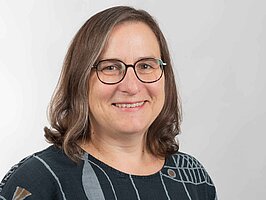
Our colleague Christine Huth is giving a presentation on the following topic:
Sound Power Level of Drones vs. Psychoacoustic Magnitudes
- Wednesday, 25 March 2026, from 11:00 to 11:20
- Seminar 3-4
The sound pressure levels of various class C0/C1 drones were measured in an anechoic chamber. In addition to the sound power level required by the EU-regulation 2019/945, recordings for psychoacoustic analysis of the main magnitudes characterizing drone noise – loudness, sharpness, and tonality – were made using a binaural system (AVL separating body). A comparison of the sound power level and the psychoacoustic parameters will be done. To enable a parameterization, measurements were also performed with different propeller geometries (number of blades) and load conditions. For these data the differences in sound power level and the psychoacoustic parameters will be discussed as well.
Presentation (Wednesday, March 25, 14:00)
Wireless, distributed acoustic measurement systems for precise source localization without phase fidelity
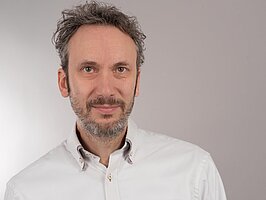
Manuel Männel is giving a presentation on the following topic:
Wireless, distributed acoustic measurement systems for precise source localization without phase fidelity
- Wednesday, 25 March 2026, from 14:00 to 14:20
- Room 5
The precise localisation of sound sources is a key challenge in technical acoustics. Traditional methods are often based on wired microphone arrays and phase-accurate signals, which increases installation costs and limits flexibility. This paper presents an approach based on wireless, distributed measurement systems from the consumer sector (smartphones) that nevertheless enables a high degree of accuracy. The signals are recorded independently and synchronised via GPS time. Time-based methods that do not require phase fidelity are used for localisation. In addition to the classic time difference of arrival (TDOA), more complex methods such as hyperbola-based triangulation, multi-pulse rhythm matching and least squares estimates are also used. These methods use the relative propagation times of several pulses to achieve robust results even in the presence of noise and missing phase coherence. Experimental investigations show that the methods presented achieve good positioning accuracy and thus represent a viable alternative to phase-accurate arrays. The results open up new possibilities for mobile and flexible measurement arrangements in large rooms or outdoors, without the limitations of classical systems.
Presentation (Wednesday, March 25, 14:20)
Correct source identification on the force measurement test bench using the in-situ blocked force method
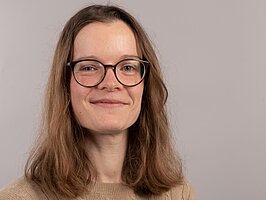
Our colleague Verena Gimpl is giving a presentation on the following topic:
Correct source identification on the force measurement test bench using the in-situ blocked force method
- Wednesday, 25 March 2026, from 14:20 to 14:40
- Conference 2
The development of auxiliary units operates in a field of tension between cost efficiency and the increasing NVH requirements of OEMs. Traditional, extensive full‑system test campaigns are increasingly being replaced by hybrid modeling approaches such as Dynamic Substructuring (DS), which, however, require high‑quality, test‑based models of active components. The in‑situ Blocked Forces (BF) method provides an effective solution, as it enables a coupling‑independent and thus transferable characterization of active components. Once determined, Blocked Forces can be applied to any passive system, thereby reducing the need for physical testing.
Using hybrid modeling, virtual parameter studies can also be carried out to evaluate the effectiveness of noise‑reduction measures — for example at the driver’s or passenger’s ear or for other noise‑exposed receiver points.
Conventional test setups with massive mounting plates and force sensors typically deliver interface forces rather than the required Blocked Forces, due to compliance at higher but relevant frequency ranges. Therefore, in a collaboration between VIBES.technology and Müller‑BBM Industry Solutions, an investigation was carried out in which this limitation is compensated for by an in‑situ BF determination using force sensors as indicators.
The results show that the method significantly improves the accuracy of frequency‑based models and thus enables more efficient NVH development of auxiliary units.
Presentation (Wednesday, March 25, 17:00)
A new H tire for CPX measurements
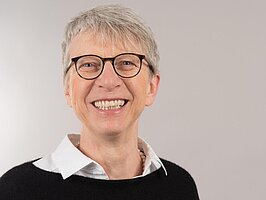
Our colleague Beate Altreuther will give a presentation on the following topic:
A new H tire for CPX measurements
- Wednesday, March 25, 2026, from 5:00 to 5:20 p.m.
- Hall 5
The CPX method is a standard procedure for assessing the acoustic properties of road surfaces. The reference tires to be used with this method are specified in DIN ISO/TS 11819-3. The tire referred to therein, H1 (AVON AV4), which is used to characterize truck tire/road noise, has not been produced since the end of 2014. Tire hardness increases with mileage and age, so the lifespan of the remaining H1 tires in use is limited: they are approaching the upper Shore hardness limit defined in DIN ISO/TS 11819-3. This makes it necessary to find a suitable replacement for the AVON AV4. Under project funding by the Federal Ministry of Transport (BMV) and with support from the Federal Highway Research Institute (BASt), a consortium of all CPX measurement providers in Germany carried out project FE 04.0340/2021/AGB “Methodology for selecting a new H test tire for the CPX procedure” and proposed a new H tire (hereafter: H2 candidate). For this H2 candidate, correction factors for air temperature and Shore hardness as well as a procedure for converting results between the reference tire and the H2 candidate were determined. In addition, the procedure applied in this project was documented in a manual as guidance for the future selection of new reference tires.
Presentation (Thursday, March 26, 08:40)
Urban soundscape design as an extension of traditional noise control
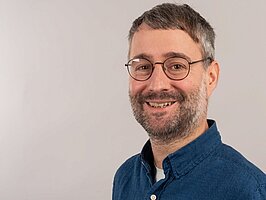
Our colleague Max Haberl will give a presentation on the following topic:
Urban soundscape design as an extension of traditional noise control
- Thursday, 26 March 2026 from 08:40 to 09:00
- Conference Room 6
As cities become increasingly dense, public open spaces gain importance. At the same time, more noise-related conflicts can be expected. Until now, noise control concepts have focused primarily on the physical properties of sound. However, the sound of a city is more than just physical parameters: it plays a crucial role in our everyday experiences and social interactions. Sounds can have a positive impact on our well-being, support our orientation, and strengthen our social and cultural bonds. In this context, a comprehensive approach is required to appropriately shape the urban acoustic environment and address potential noise conflicts. This contribution analyses, using examples, which conditions are essential for the listening experience in a specific urban context. From this, tools and methods for designing the urban soundscape are derived. Integrating these tools and methods into urban planning can significantly contribute to the development of high-quality urban spaces and situations, as well as to expanding conventional noise control measures. Such a holistic approach to urban soundscape design benefits not only city residents but also municipalities, authorities, and investors.
Presentation (Thursday, March 26, 10:40)
Generic Ship Models for Machine Learning
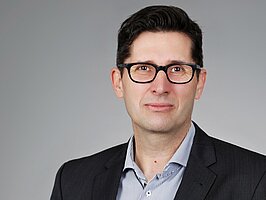
Our colleague Andreas Müller is giving a presentation on the following topic:
Generic Ship Models for Machine Learning
- Thursday, 26 March 2026, from 10:40 to 11:00
- Conference 5
This study presents a framework for creating generic ship signature models used to simulate underwater acoustic emissions. The goal is to provide comprehensive datasets for machine learning applications in maritime acoustics. By abstracting ship geometries and propulsion characteristics, the models enable scalable and reproducible simulations.
The synthetic datasets cover a wide range of operational and environmental conditions, forming a robust basis for AI systems to detect, classify, and analyze acoustic signatures. The approach supports the development of intelligent methods for underwater surveillance, environmental monitoring, and marine research.
Studies such as Lyu et al. (2025), Du & Hong (2024), and Liu et al. (2015) demonstrate the effectiveness of such datasets for training deep learning models. To depict realistic ship‑passage scenarios, the required depth of modelling is also discussed — including source modelling and sound propagation.

Do you have any questions?
Feel free to reach out to me!
-
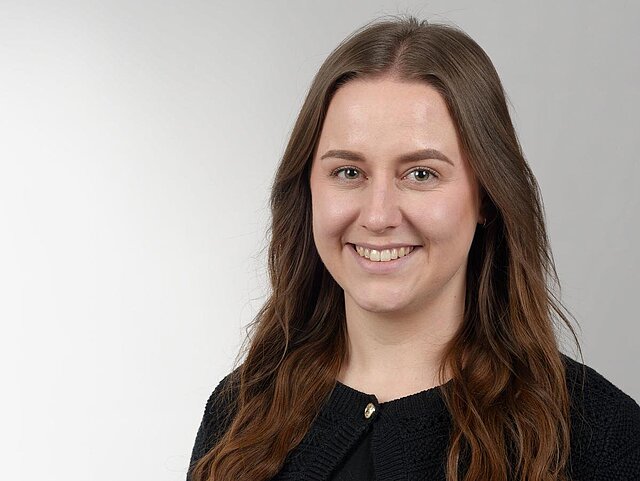 Celina Mirlach
+49 (89) 85602-132 +49 (89) 85602-111 celina.mirlach@mbbm-ind.com Planegg/Munich