E‑mobility
Noise emissions during the charging process of electrically powered vehicles
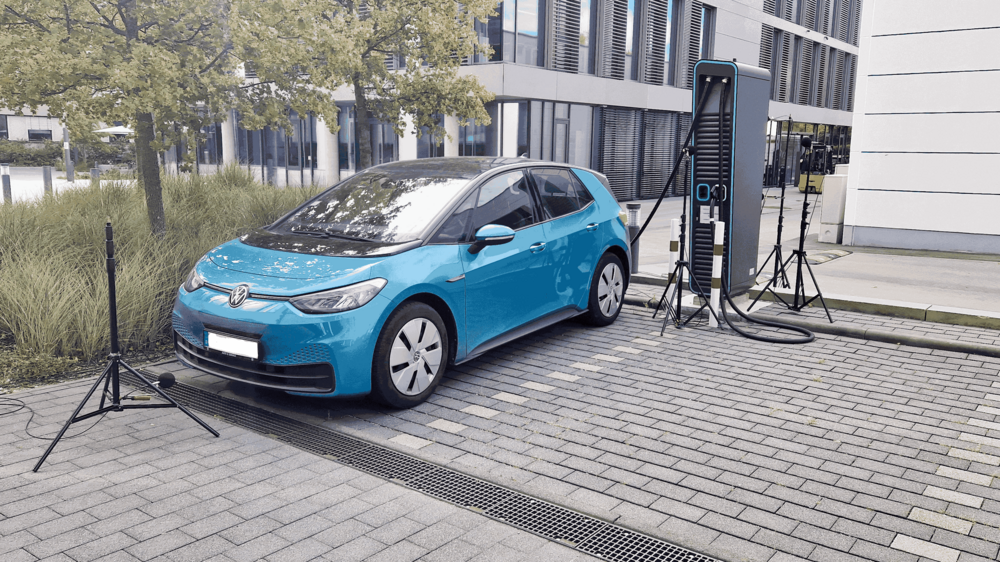
With the expansion of charging infrastructure, e‑mobility is growing – along with questions about its environmental impact. On behalf of the German Environment Agency, Müller‑BBM Industry Solutions investigated the noise generated during the charging of various electric vehicles and determined the respective contributions of the vehicle and the charging station. The results provide a robust data basis for prediction models and show how charging processes can be represented acoustically.
At a glance
| Client: | Umweltbundesamt |
| Industry: | E‑mobility |
| Object: | Electric vehicles / charging stations |
| Expertise: | Noise emissions |
| Location & period: |
|
Initial situation
As charging infrastructure expands, interest is also growing in the noise generated during the charging of electric vehicles. Especially during fast charging, high power levels are involved, activating cooling processes and components that can produce audible noise emissions. At the same time, the vehicles themselves generate noise, for example through battery cooling during intensive charging processes.
Mission
As part of a research project commissioned by the German Environment Agency, Müller‑BBM Industry Solutions investigated the noise emissions generated during the charging of electric vehicles, the respective contributions of the vehicle and the charging station, and the resulting acoustic requirements. Only fully electric passenger cars were considered, as hybrid vehicles generally do not support fast charging due to their smaller battery capacities.
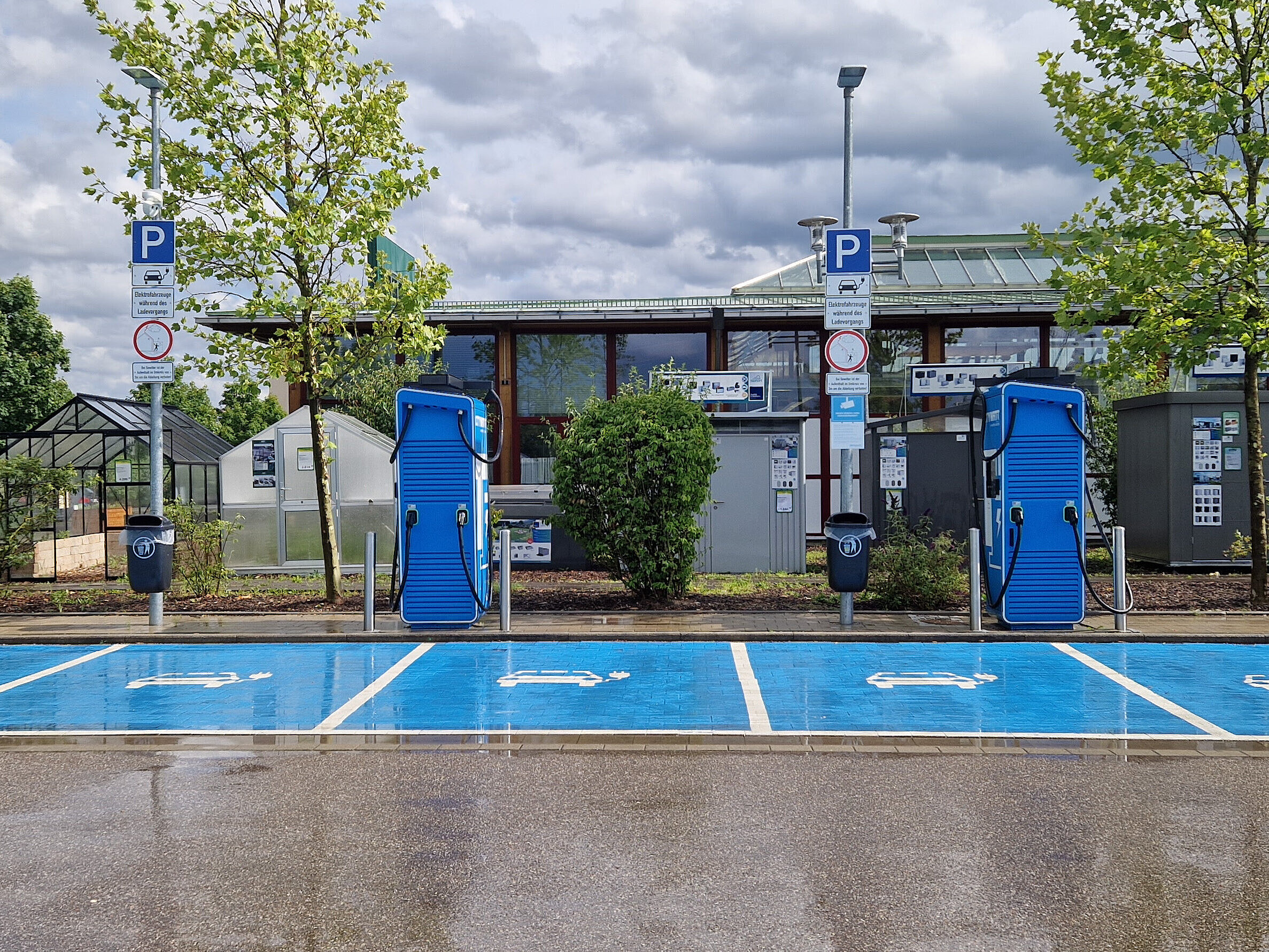
Charging processes were examined for passenger cars of different vehicle classes – compact cars, mid-size vehicles, and SUVs – and at various charging stations: DC fast charging stations with power outputs of 150 to 300 kW, as well as 11 kW wallboxes.
Data acquisition was carried out using the PAK measurement and analysis software developed by Müller‑BBM VibroAkustik Systeme GmbH, in combination with a so-called MKII frontend. PAK is an integrated solution specifically designed for the acquisition, analysis, and management of physical data in the fields of acoustics, vibration, and structural dynamics. Its modular design allows the multi-channel measurement system to be configured for a wide range of applications.
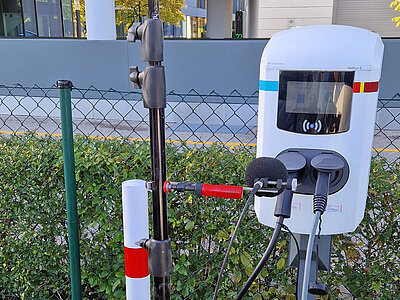
Measurements at a charging station
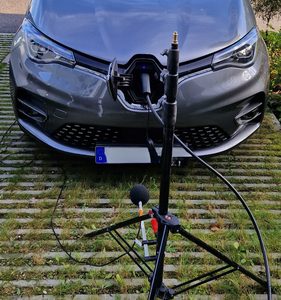
To capture the noise emissions of a charging station under realistic conditions, all relevant sound sources – from airflow to ventilation noise – are recorded in a targeted manner. If standard measurement points are not accessible on site, flexible alternative microphone positions are used.
For each charging station, an enveloping surface is calculated that accounts for the distance between the microphone and the sound source. This forms the basis for determining a characteristic sound power level, enabling reliable and comparable emission assessments regardless of the type of the charging station.
Measurements at an electric vehicle
The charging noise of various electric vehicles was investigated under real-world conditions. As charging curves vary depending on battery state, temperature, and driving behavior, a wide range of operating conditions was observed.
In addition, vehicle-related cooling noise was recorded. Many vehicles activate battery cooling during charging, which is audible through front air inlets. Measurements show that these noise levels are of a similar order of magnitude across different types of vehicles – largely independent of ambient temperature or charging power.
Result
The investigations reveal significant differences in the noise behavior of vehicles and charging infrastructure. Some vehicles can be charged almost silently, while others generate noticeable cooling noise. At the same time, the sound power level of the charging station increases with the charging power: DC fast-charging systems are acoustically more active, whereas 11 kW wallboxes operate almost silently, with only vehicle-related fan noise being detectable.
In very quiet situations, background noise corrections were applied to exclude external interference. Overall, most charging processes are acoustically uncritical; however, temporarily audible cooling phases can be expected depending on the vehicle model and charging power.
Learn more about our area of expertise
Mobility & Transport Acoustics
![[Translate to English:] Gewerbeimmobilien, Industrie, Lärmschutz](/fileadmin/_processed_/3/6/csm_mbbm-ind_infrastruktur_20250224_d68236419c.jpg)
Noise protection