Acoustic assessment of Siemensstadt Square Berlin
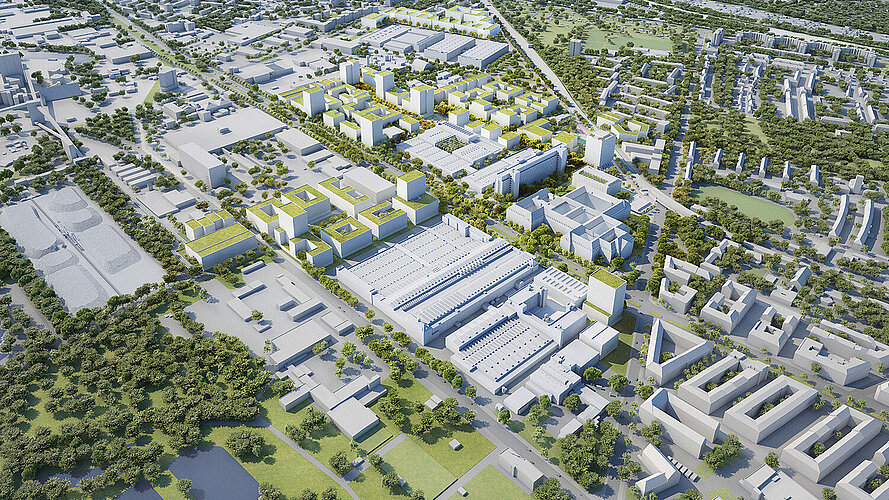
Siemensstadt Square in Berlin is evolving into a forward‑looking urban district where diverse uses coexist in a compact space. This creates a demanding acoustic environment that requires early and precise planning. Müller‑BBM Industry Solutions is supporting the project with its expertise in noise control.
At a glance
| Client: | Siemens AG |
| Industry: | Technology |
| Object: | Planning area in the Siemensstadt district (34 hectares) |
| Expertise: | Noise control |
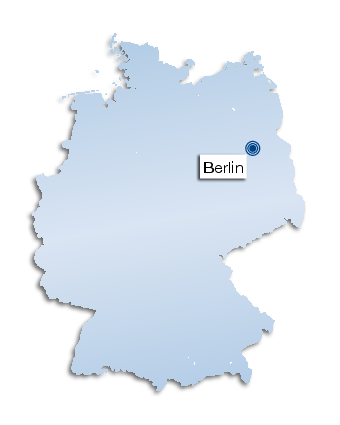
| Location & period: | Berlin-Spandau 2019 - today |
Initial situation
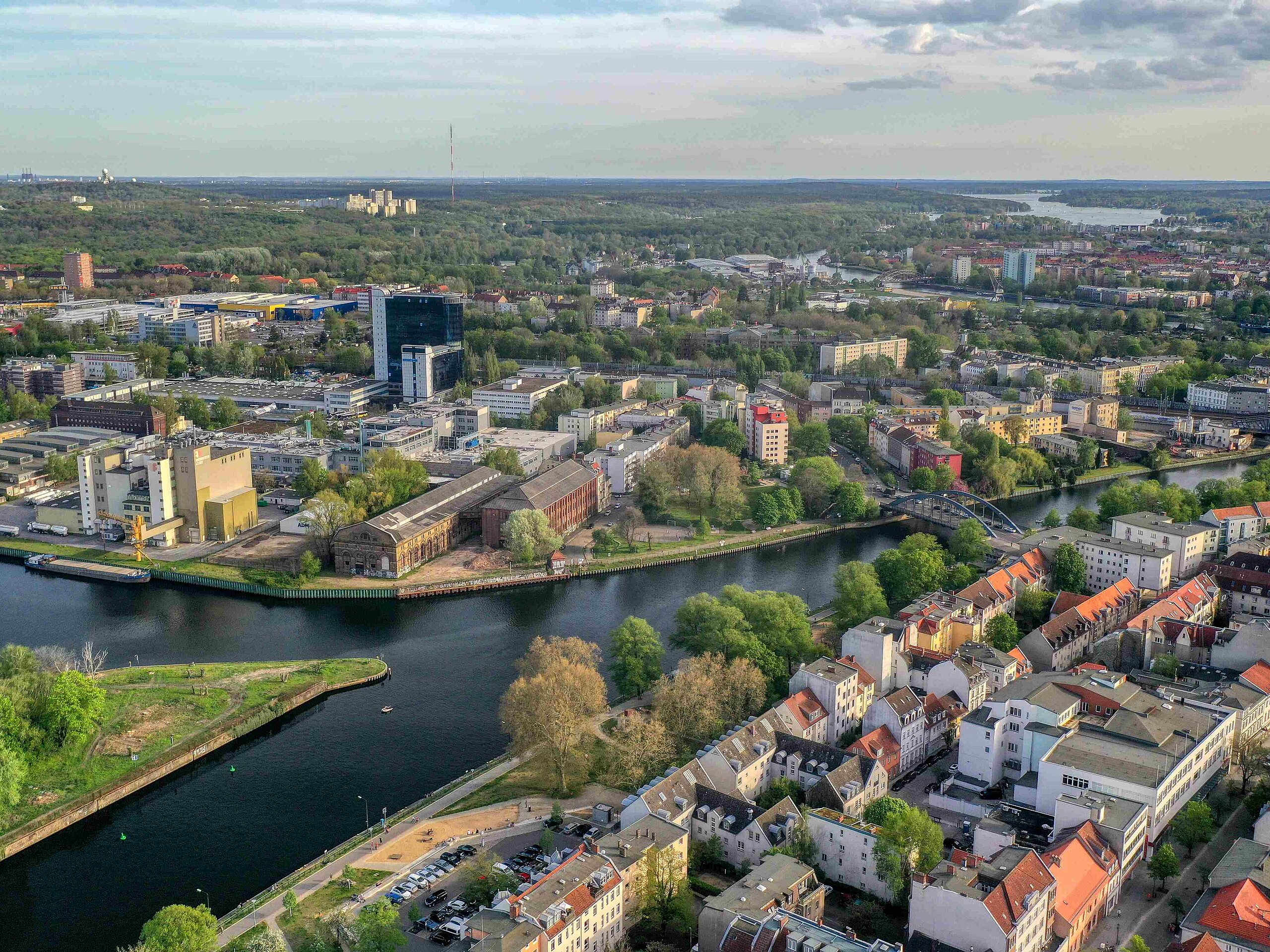
The Siemensstadt Square master plan provides for a comprehensive reorganization of the existing, already developed industrial area in the Siemensstadt district. While part of the industrial land is secured and will continue to be used in accordance with existing development plans, other sub‑areas will be further developed into industrial and commercial zones, urban districts, and general residential areas as part of the development plan 5‑123b. In addition, various open spaces with recreational functions are planned.
Through the spatial concentration and consolidation of the existing industries, new development areas are created, while individual companies need to adapt their site organization. However, the planned closer integration of residential uses with commercial and industrial activities leads to potential conflicts: residential areas have a high demand for quiet, whereas commercial and industrial processes are typically associated with significant noise generation. In addition to industrial noise, the planning area is also exposed to road traffic noise and rail noise from the adjacent Siemensbahn.
This combination of factors requires careful urban and environmental noise planning in order to safeguard the operational viability of existing businesses while at the same time enabling high‑quality, noise‑compatible living and open‑space environments.
Mission
For the development of the Siemensstadt Square master plan, Müller‑BBM Industry Solutions was commissioned with a comprehensive acoustic assessment. The objective was to integrate the various uses – residential, commercial, industrial, transport, and public open spaces – in a way that ensures healthy and future‑proof environmental conditions. All relevant regulations were applied, including DIN 18005, the 16th and 18th Federal Immission Control Ordinances (BImSchV), TA Lärm, RLS‑19 and VDI 3770. The assessment covered both the noise sources acting upon the area and those emanating from the planning area itself.
Within the project, we demonstrate the feasibility of the proposed development by showing, on the basis of typical industrial and commercial processes, that the intended land uses are indeed compatible with the adjacent residential areas. This ensures that the planning will not later fail during approval procedures. In doing so, we draw on our extensive expertise in operational processes and their acoustic characteristics.
Early consultancy in the urban planning process
Already during the urban design competition, Müller‑BBM Industry Solutions provided the acoustic framework conditions. This allowed the planning teams to identify potential noise conflicts at an early stage and take them into account in their design proposals.
In the subsequent planning phases, the mix of uses and the positioning of buildings were closely coordinated with the acoustic requirements – a crucial element for ensuring a functional coexistence of residential and commercial uses.
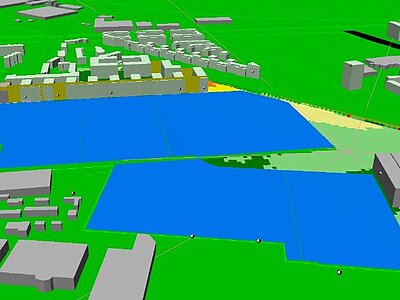
Noise‑robust urban planning solutions
To avoid the anticipated conflicts related to industrial and commercial noise, we developed specific measures, including:
- protective commercial building blocks (“Gewerberiegel”) with defined minimum heights
- maximum heights for residential buildings
- noise quotas for industrial and commercial activities
- variant studies on noise barriers
- integration of the results into the statutory development plan
Transport and rail planning
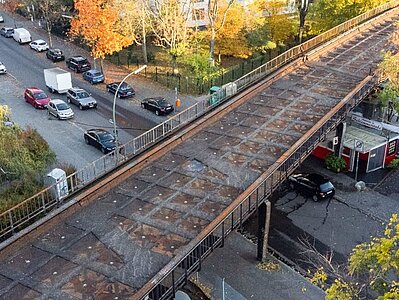
With the planned reactivation of the Siemensbahn railway, rail noise played a central role.
We supported the coordination with Deutsche Bahn and developed effective and economically viable solutions – including low‑height noise barriers and under‑ballast mats. Road traffic noise was also comprehensively assessed and incorporated into the overall planning.

Protection of public open spaces
The diverse open spaces – some designed for recreation, others for play and sports – required both noise protection and an assessment of the noise they themselves generate.
We determined permissible noise levels and provided guidance on which sports uses are compatible with adjacent residential areas. In doing so, clear parameters for the subsequent detailed planning were defined at an early stage.
Result
Müller‑BBM Industry Solutions developed a comprehensive concept addressing all relevant noise conflicts for Siemensstadt Square.
The basis was a clearly structured assessment process – from spatial separation of uses and source‑based noise mitigation to urban design solutions and passive noise protection.
Thanks to our early involvement during the urban design competition, key conflicts were identified early on and embedded in the conceptual urban planning. The outcome is a noise‑robust urban structure in which residential uses, commercial activities, transport infrastructure and public open spaces coexist in a compatible way.
For the statutory development plan, we provided precise and practical regulatory recommendations, including guidelines on building heights, spatial orientation, protective building configurations, special façade and window constructions, traffic‑related measures, and noise quotas. These recommendations enable a targeted and efficient implementation without requiring all stakeholders to dive into technical details.
The result is a district that is both planning‑robust and long‑term approval‑ready – supported by the technical expertise of Müller‑BBM Industry Solutions.
Learn more about our area of expertise
Urban planning