Urban Soundscape Planning
Liveable Cities
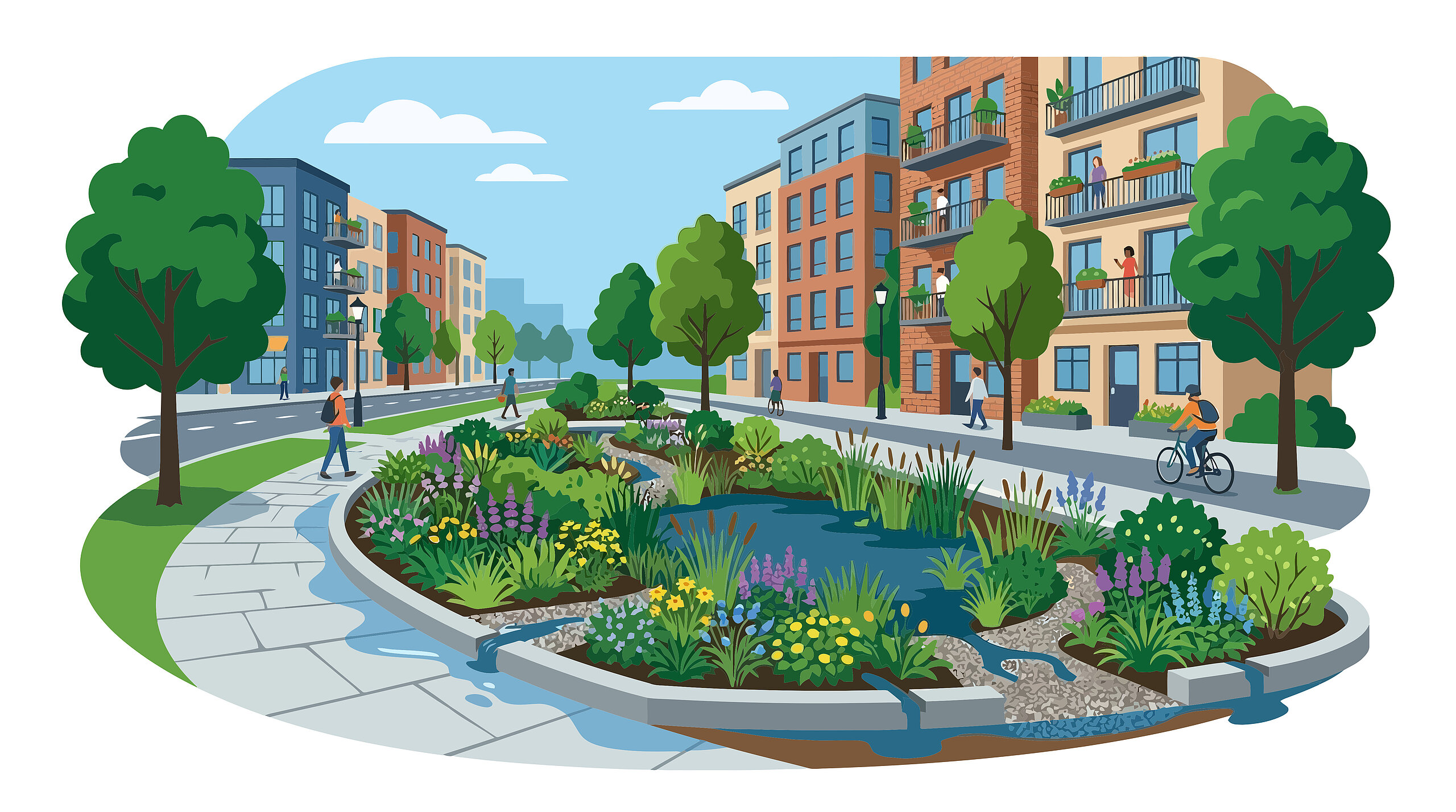
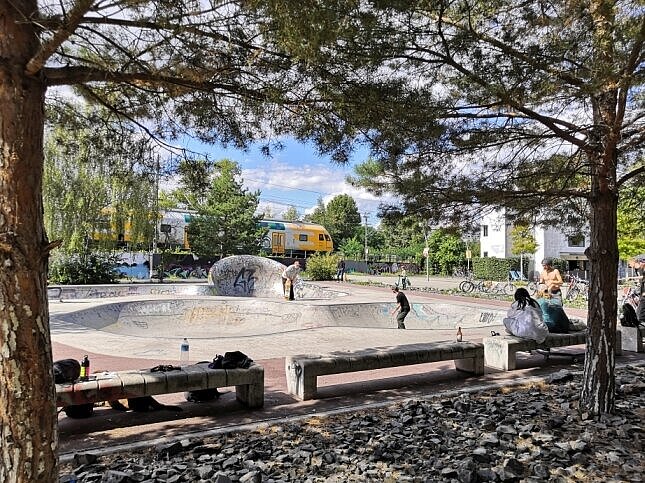
Cities have a sound. Conversations, children playing, the lively bustle of squares and markets, birdsong, water and many other sound events can shape the acoustic character of urban spaces. How the urban soundscape arises and is experienced also depends on architecture, open-space design, materials, vegetation, uses and the prevailing sound propagation conditions. Acoustic quality means more than keeping sound levels as low as possible. What matters is how well the urban soundscape suits the function, use and character of a place and how people perceive and experience its acoustic environment.
With our Urban Soundscape Planning approach, we expand conventional noise control by adding a qualitative, design-oriented perspective. Our goal is to create urban spaces that are not only less affected by noise, but also acoustically compelling.
Urban Soundscape as a
Planning Task
Noise control is an important foundation for liveable cities. Urban Soundscape Planning goes one step further: it treats the acoustic quality of a place as an active planning task.
Different urban spaces place different demands on their acoustic environment. A city square may sound lively and urban. In a park, tranquillity, recreation and experiencing nature tend to be the priority. Residential neighbourhoods, in turn, often require a calmer, familiar acoustic character without having to seem silent or lifeless.
There is therefore no single correct urban soundscape. We develop acoustic qualities from the specific place itself, taking account of its use, function, design and spatial context.
How We Shape the Urban Soundscape
1. Analyse the acoustic environment
What does a place sound like today, and how is it perceived?
We analyse the existing acoustic environment using both conventional methods and soundscape approaches, including measurements, sound propagation calculations, soundwalks and methods in accordance with ISO 12913. In addition to sound, we consider how the space is used and designed, as well as people’s expectations of it. This allows us to identify acoustic qualities, potential conflicts and opportunities for improvement at an early stage.
2. Define acoustic objectives
What should a place sound like in the future?
Together with the project team, we develop a target acoustic environment. Different areas can be deliberately designed as vibrant, communicative or quiet zones and tailored to their intended use.
3. Develop acoustic measures
How do we achieve the desired acoustic environment?
Based on the analysis and defined objectives, we develop specific measures:
- Shape sound events: Preserve or enhance desirable sounds, reduce unwanted sounds or deliberately introduce new ones.
- Influence sound propagation: Optimise buildings, façades, materials and surfaces from an acoustic perspective.
- Consider expectations: Align the acoustic character with the use, function and design of the space.
The interaction of these three areas is crucial. The aim is not to create as many additional sounds as possible, but to develop a coherent overall acoustic situation that suits the character, function and use of the place.
Where Is Urban Soundscape Planning Used?
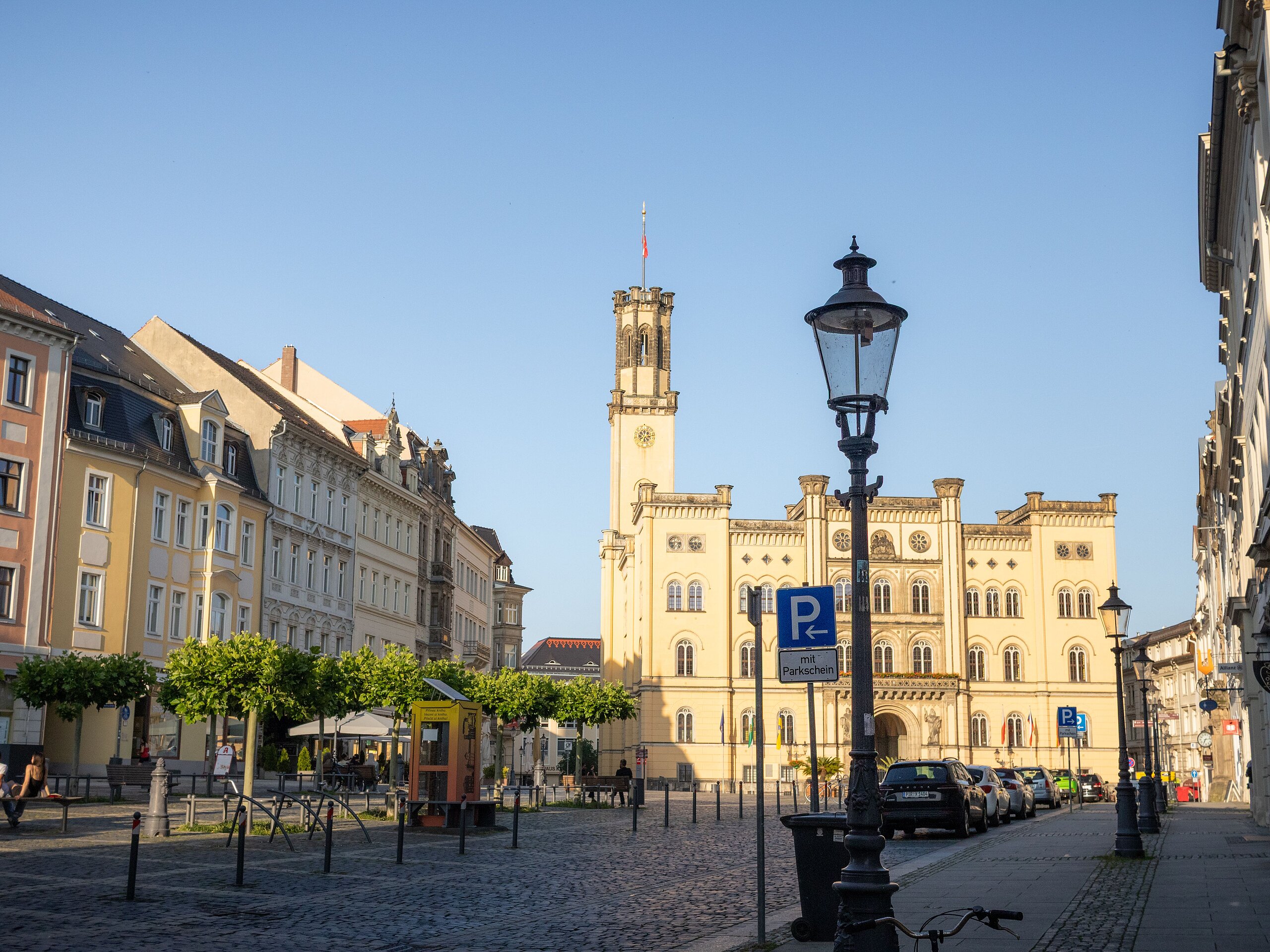
city squares and public spaces
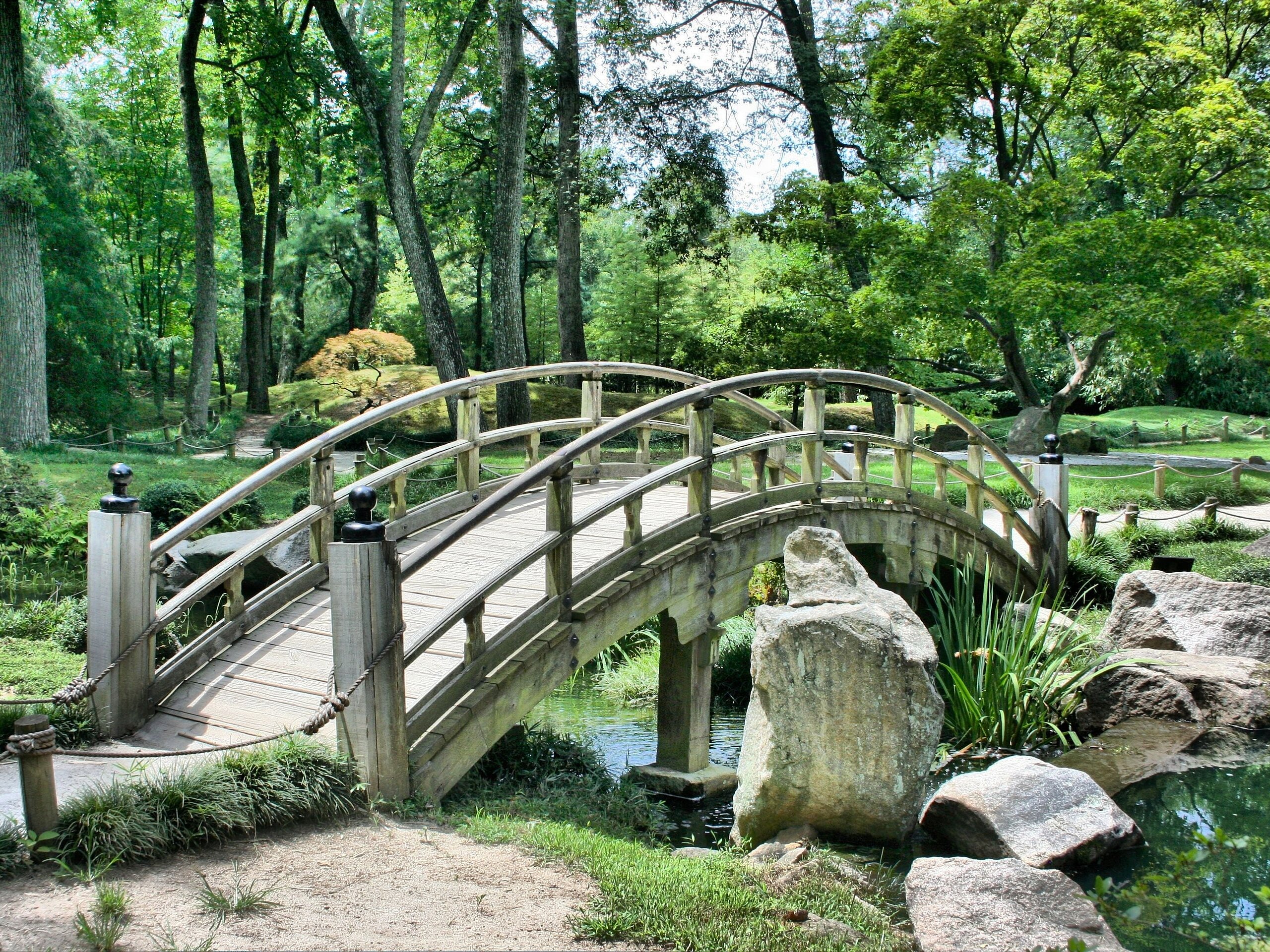
parks, green spaces and open spaces
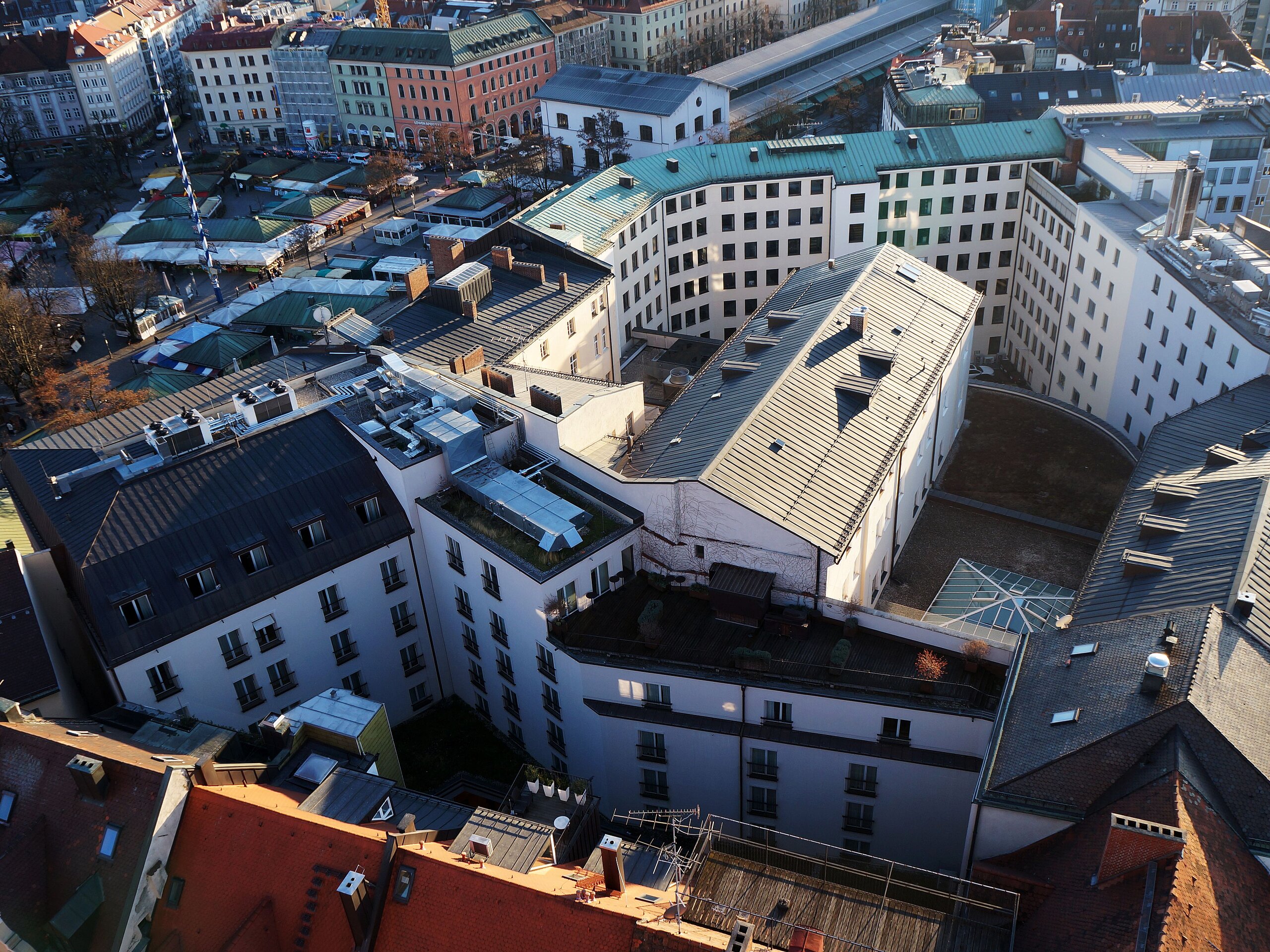
new urban districts
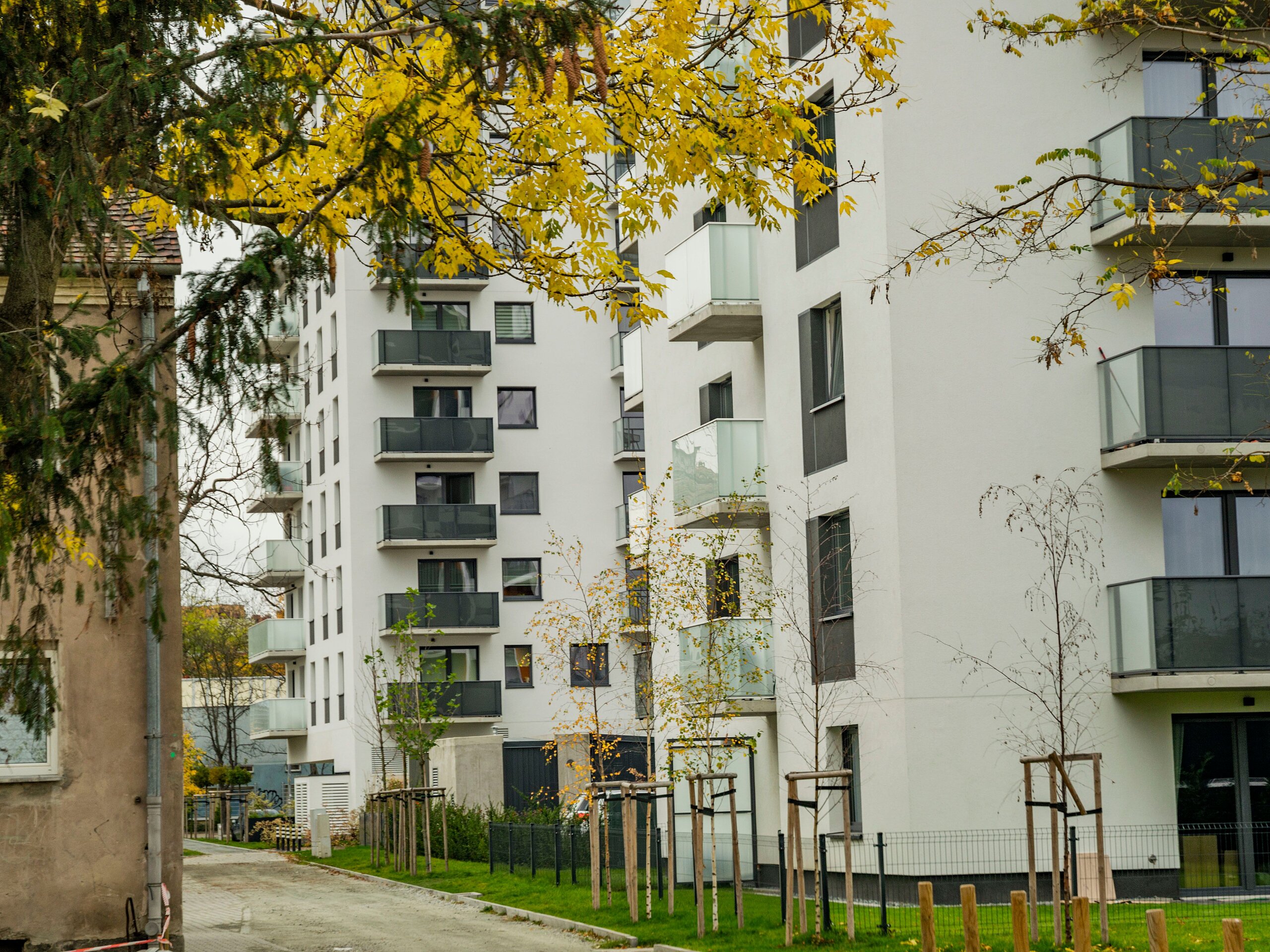
residential neighbourhoods and mixed-use areas
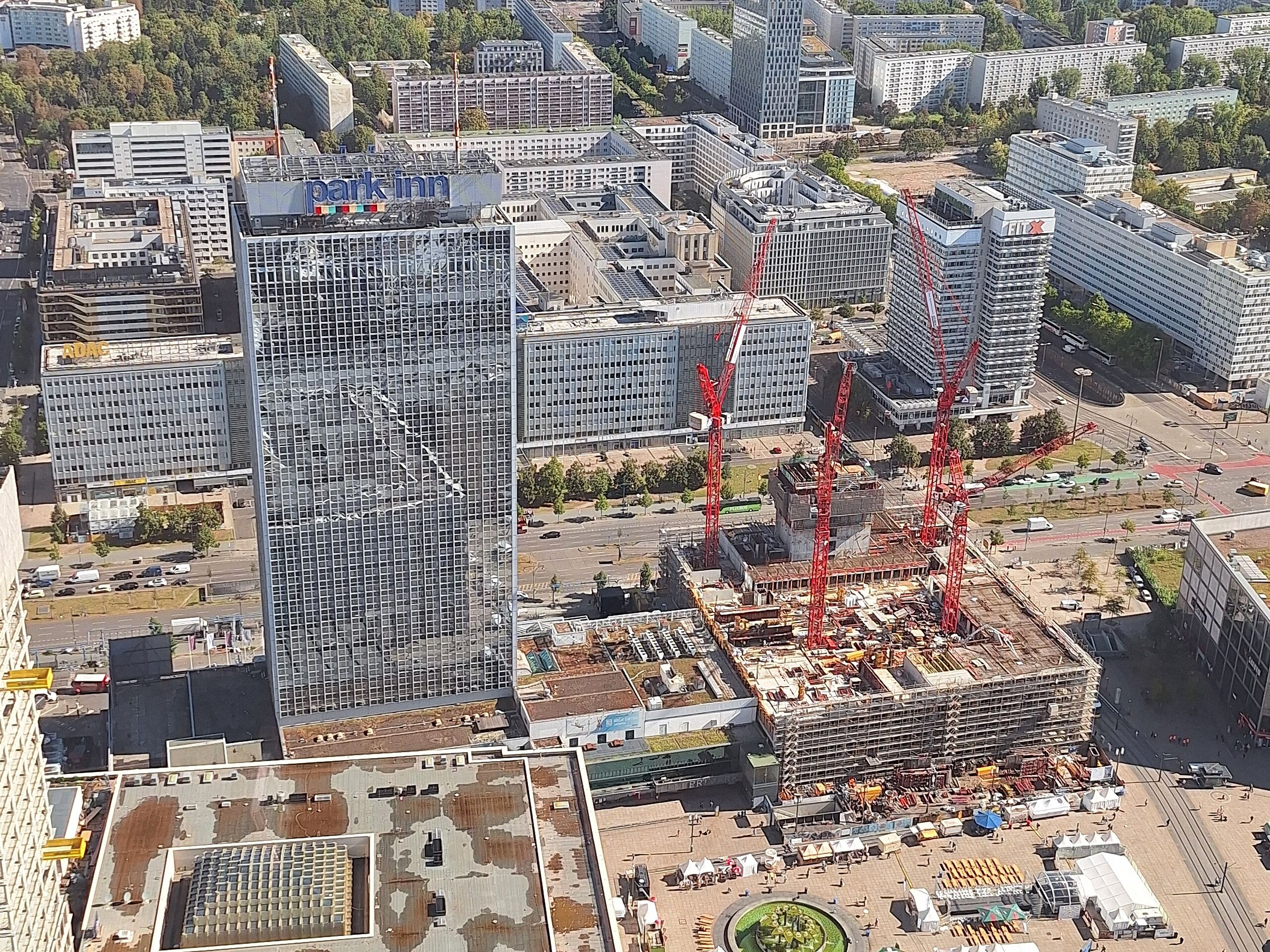
Urban renewal and transformation projects

campuses, educational and cultural sites
Take urban sounds into account at all levels of planning
Urban Planning and Urban Design
Fundamental objectives for the urban soundscape can already be developed in framework plans, urban designs and master plans. The distribution of building volumes and uses establishes essential conditions for which sound events arise, how sound propagates and what acoustic character can be expected of a place.
Statutory Land-Use Planning
At the level of statutory land-use planning, the first specific spatial and structural conditions that help determine the later urban soundscape are established. These include, for example, uses, green spaces, planting requirements, building heights and building lines. Urban Soundscape Planning can support and evaluate these provisions at an early stage from acoustic and perception-based perspectives.
Urban Development Agreements
Urban development agreements can further specify planning requirements. Additional conditions can be formulated here concerning, for example, uses, materials and surface properties, as well as the design character of a place—and therefore sound events, sound propagation and expectations.
Open-Space Design
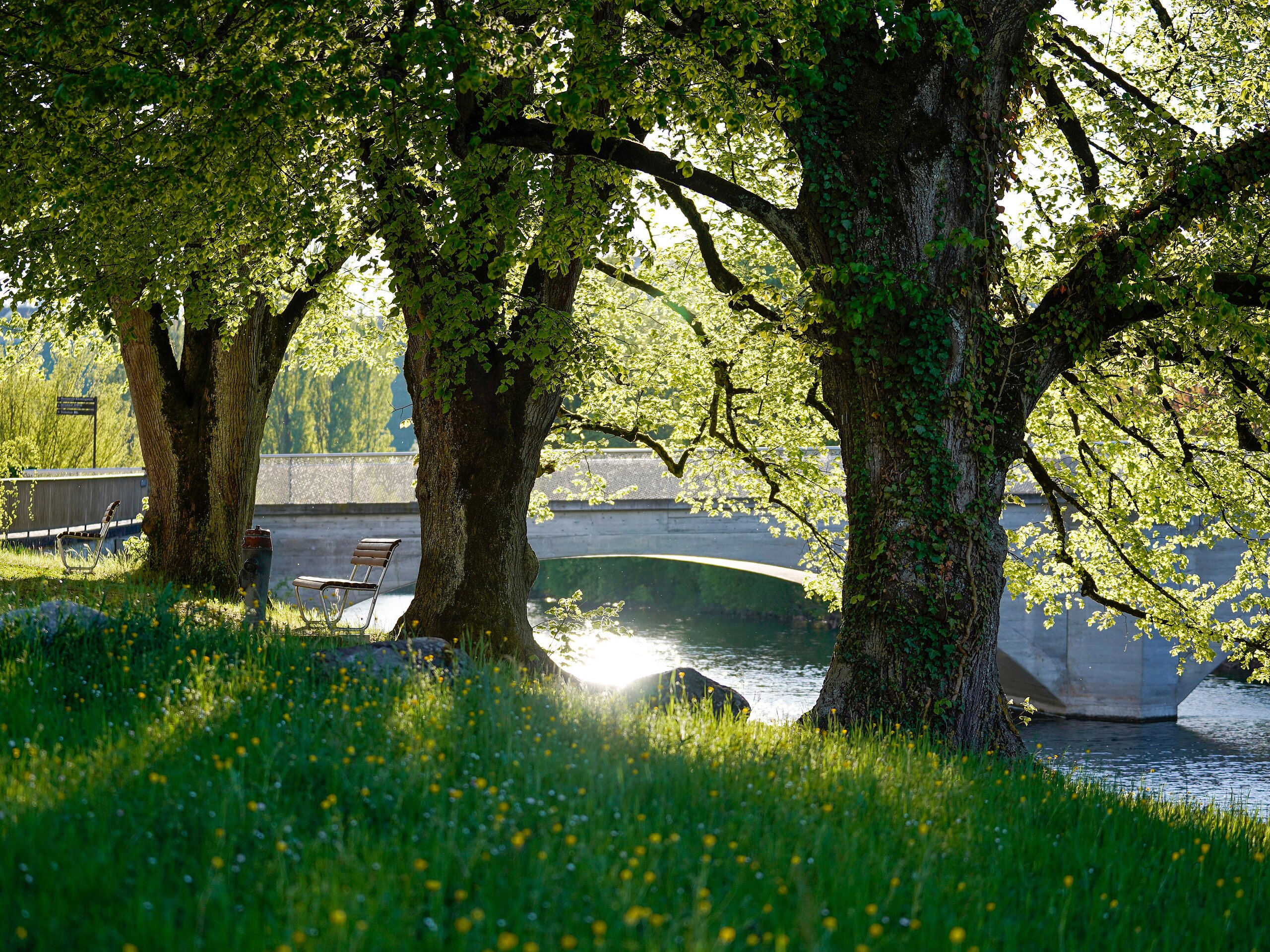
In open-space and landscape planning, the urban soundscape can be shaped down to specific spatial details. Uses, vegetation, water, path materials, topography and surfaces influence which sounds arise, how they propagate and what acoustic character an open space acquires.
Architecture and Building Design
Architecture and building design also shape the urban soundscape. Building form, position, materials and surfaces influence sound propagation; the distribution of uses within and around buildings can determine which sound events arise in the adjacent urban space. At the same time, architectural appearance shapes expectations of a place’s acoustic situation.
Interdisciplinary Urban Soundscape Planning
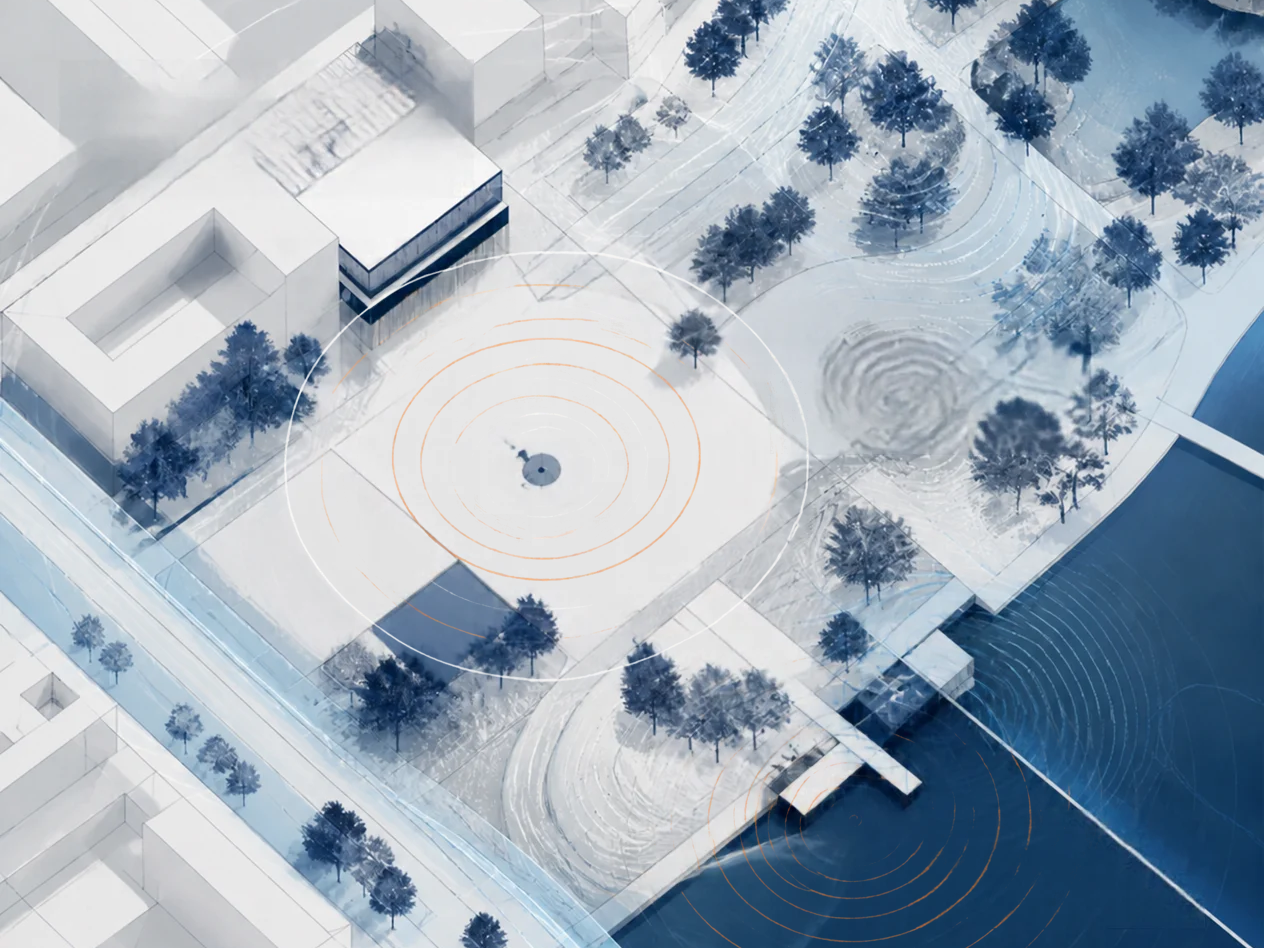
The urban soundscape results from the interaction of many factors. We therefore work at the interfaces with urban planning, architecture, landscape architecture and other specialist disciplines.
Particular synergies arise, for example, with urban climate, open-space planning and ecological planning. Desealing, greening, water and differentiated vegetation concepts can form part of integrated planning approaches in which acoustic, climatic and spatial qualities are considered together.
This creates solutions that go beyond considering individual environmental aspects in isolation.
Soundscape Meets Planning Expertise
The term soundscape refers to the acoustic environment as perceived and experienced by people in a particular context. The soundscape approach therefore expands the purely physical consideration of sound to include perception, use and spatial context.
With Urban Soundscape Planning, we translate this perspective into practical urban and open-space planning. We combine Müller-BBM’s many years of expertise in sound and noise control with a perception-oriented and design-based view of the acoustic environment.
Urban sound thus becomes a consideration not only once noise has become a problem, but already when high-quality urban spaces are being developed.
The City of the Future Doesn't Have to Be Quiet.
It Should Sound Good.
With our Urban Soundscape Planning approach, we help municipalities, planners and project developers consider acoustic quality from the outset. We combine conventional noise control, acoustics, soundscape and planning to develop solutions for liveable, distinctive and future-ready urban spaces.
Your Benefits
- Taking a holistic approach to acoustic quality: We consider not only sound levels, but also the soundscape, perception and use of a place.
- Identifying conflicts at an early stage: We integrate acoustic requirements into the planning process from the outset, helping to preserve design flexibility.
- Enhancing quality of place: We develop context-sensitive soundscape concepts that support attractive urban spaces tailored to their intended use.
- Strengthening identity and sense of place: We shape acoustic qualities that contribute to the distinctive character and identity of a place.
- Planning across disciplines: We integrate acoustics with urban planning, architecture, landscape planning and urban climate.
What should your project sound like in the future? Talk to us about the possibilities of Urban Soundscape Planning.
Do you have any questions?
Feel free to reach out to us!
-
 Max Haberl
+49 (89) 85602-3043 +49 (89) 85602-111 max.haberl@mbbm-ind.com Planegg/Munich
-
 Thomas Kusitzky
+49 (30) 217975-689 +49 (30) 217975-35 thomas.kusitzky@mbbm-ind.com Berlin