Light immission report for an assessment under species protection law
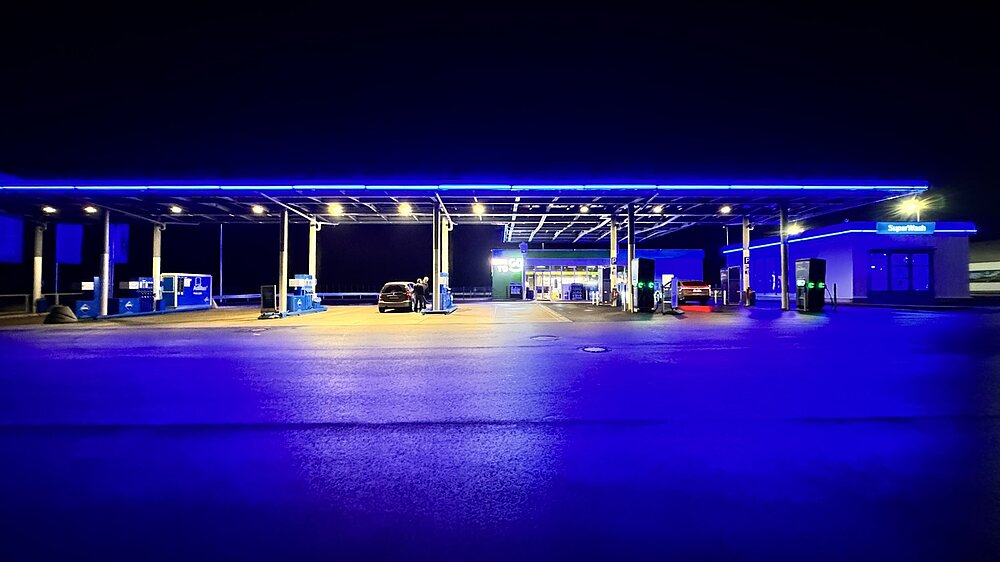
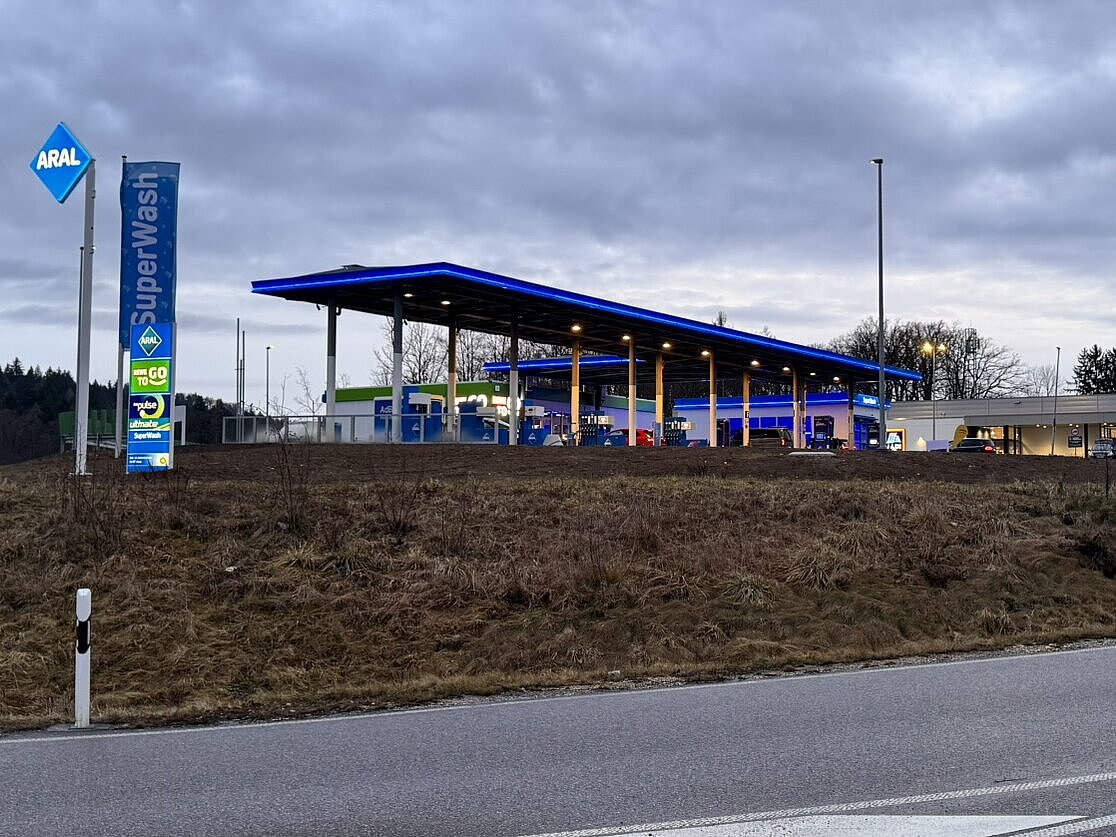
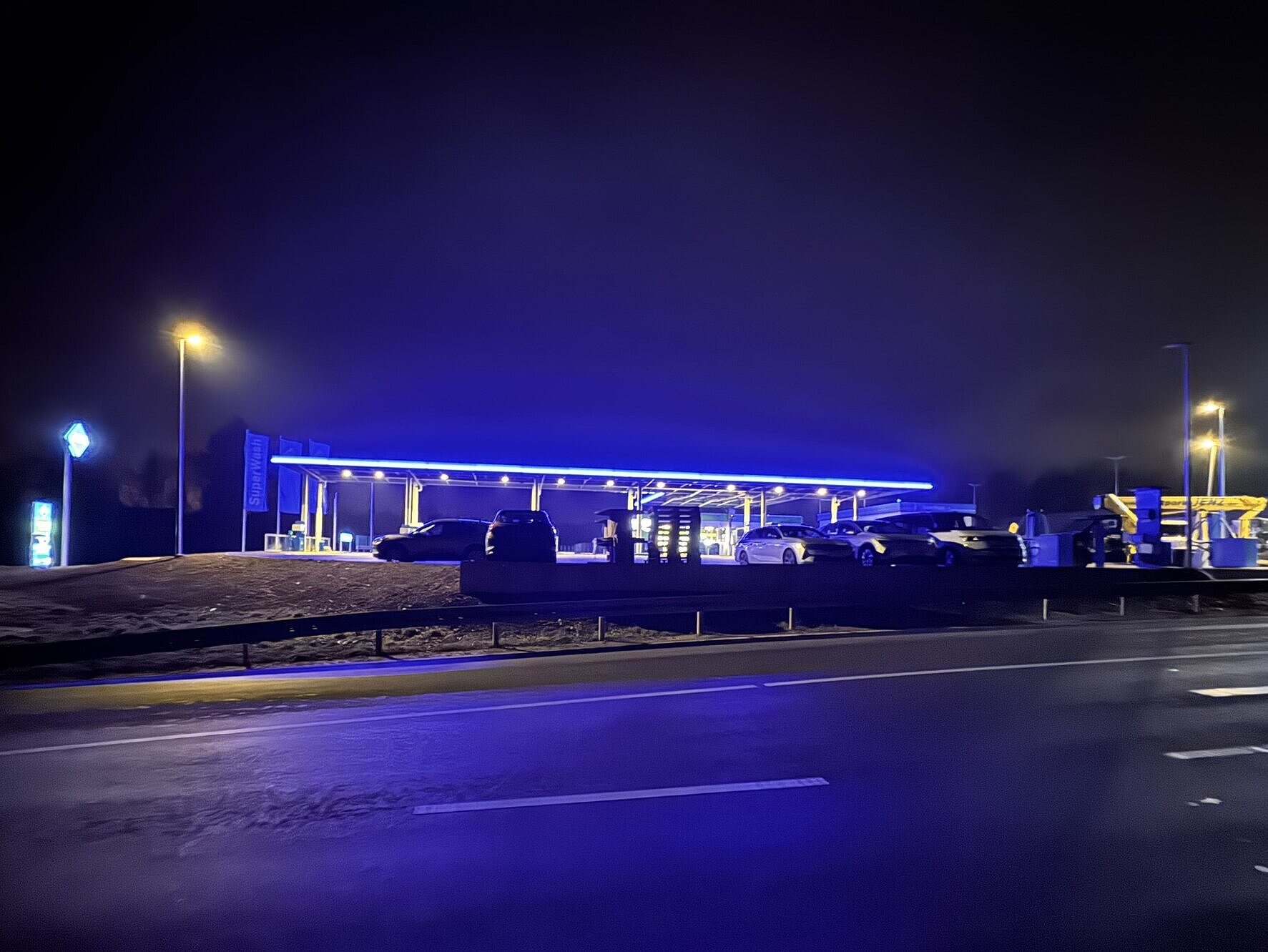
When constructing a new ARAL service station in Grafenberg, lighting plays a crucial role – sensitive habitats of stag beetles and hunting bats are located in the immediate surroundings. Using a lighting simulation model, Müller‑BBM Industry Solutions calculated the expected light immissions and, after the lighting system was put into operation, conducted on‑site measurements to ensure compliance with species protection requirements.
At a glance
| Client: | Bankai Architekten/BP Bochum |
| Industry: | Mineral oil industry |
| Object: | ARAL gas station |
| Expertise: | Light |
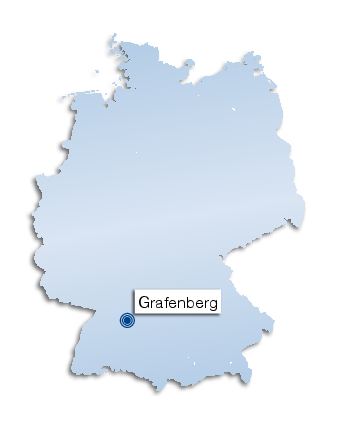
| Location & period: | Grafenberg, Baden-Württemberg November 2025 |
Initial situation
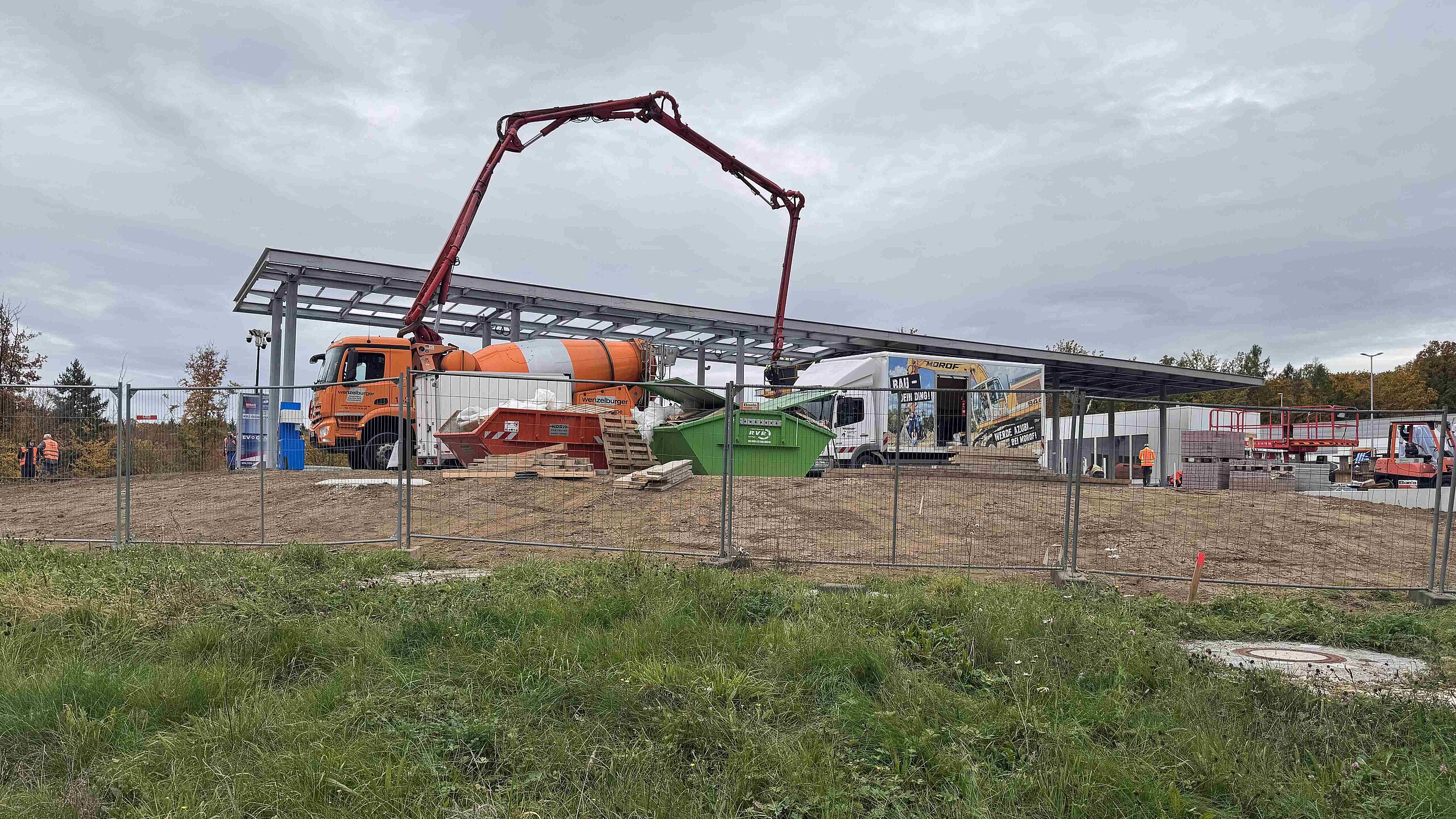
In the municipality of Grafenberg, a new ARAL service station is being built on the GE 3 commercial site. The land-use plan permits this use but sets clear requirements for the lighting to ensure that protected species—such as stag beetles and foraging bats – along the nearby forest edge are not disturbed. Since the forest and existing stag beetle habitats are only about 20 to 40 meters from the construction site, all planned light sources must be carefully reviewed and designed to prevent any disturbing illumination toward the forest.
Mission
Expert Opinion
For the lighting assessment required for the building permit, the expected light immissions from the relevant light sources were calculated and evaluated at the sensitive areas using a lighting prediction model. Based on this, appropriate mitigation measures were developed.
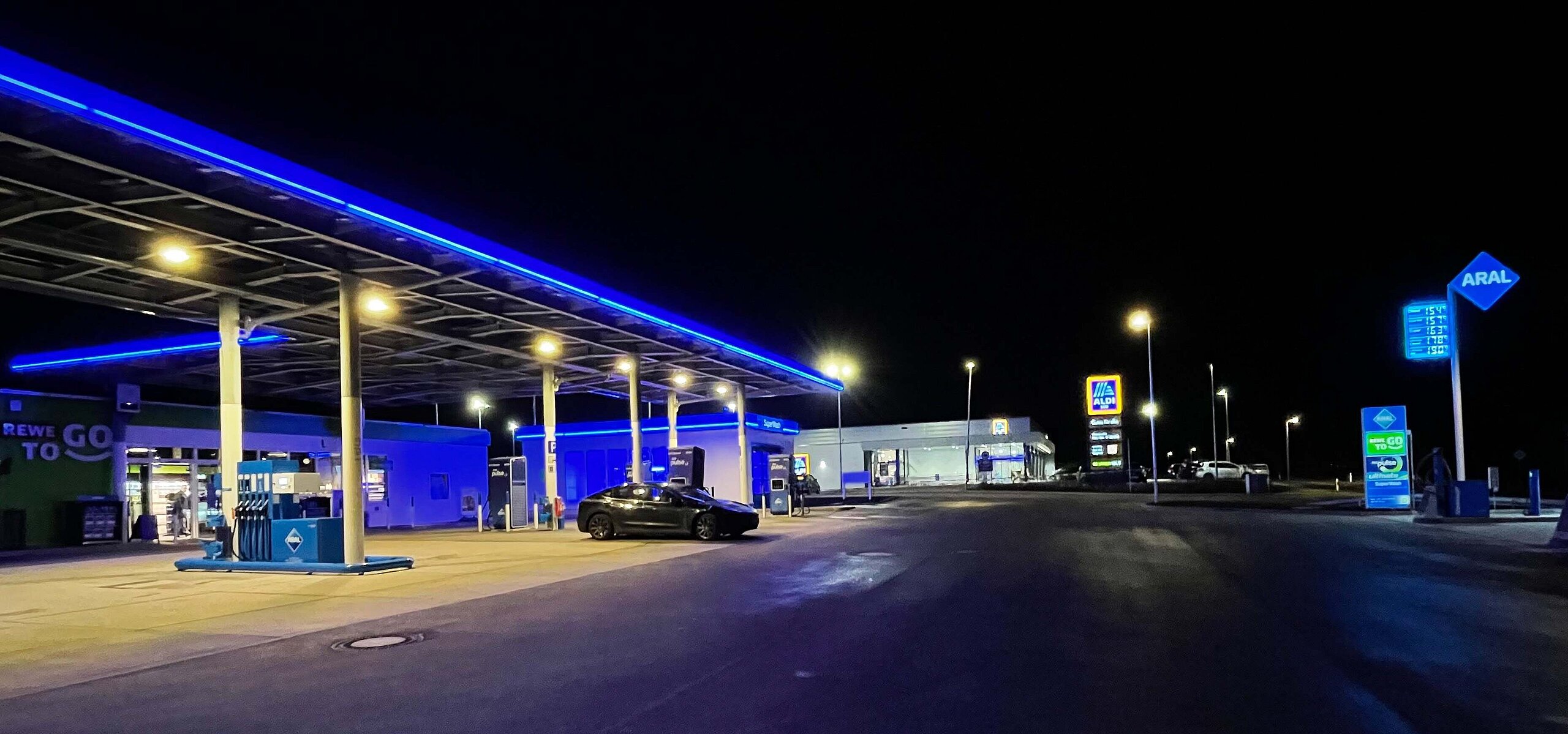
The light sources can be broadly divided into the following categories:
- Canopy lighting (recessed ceiling luminaires)
- Parking lot and pathway lighting (pole‑mounted luminaires)
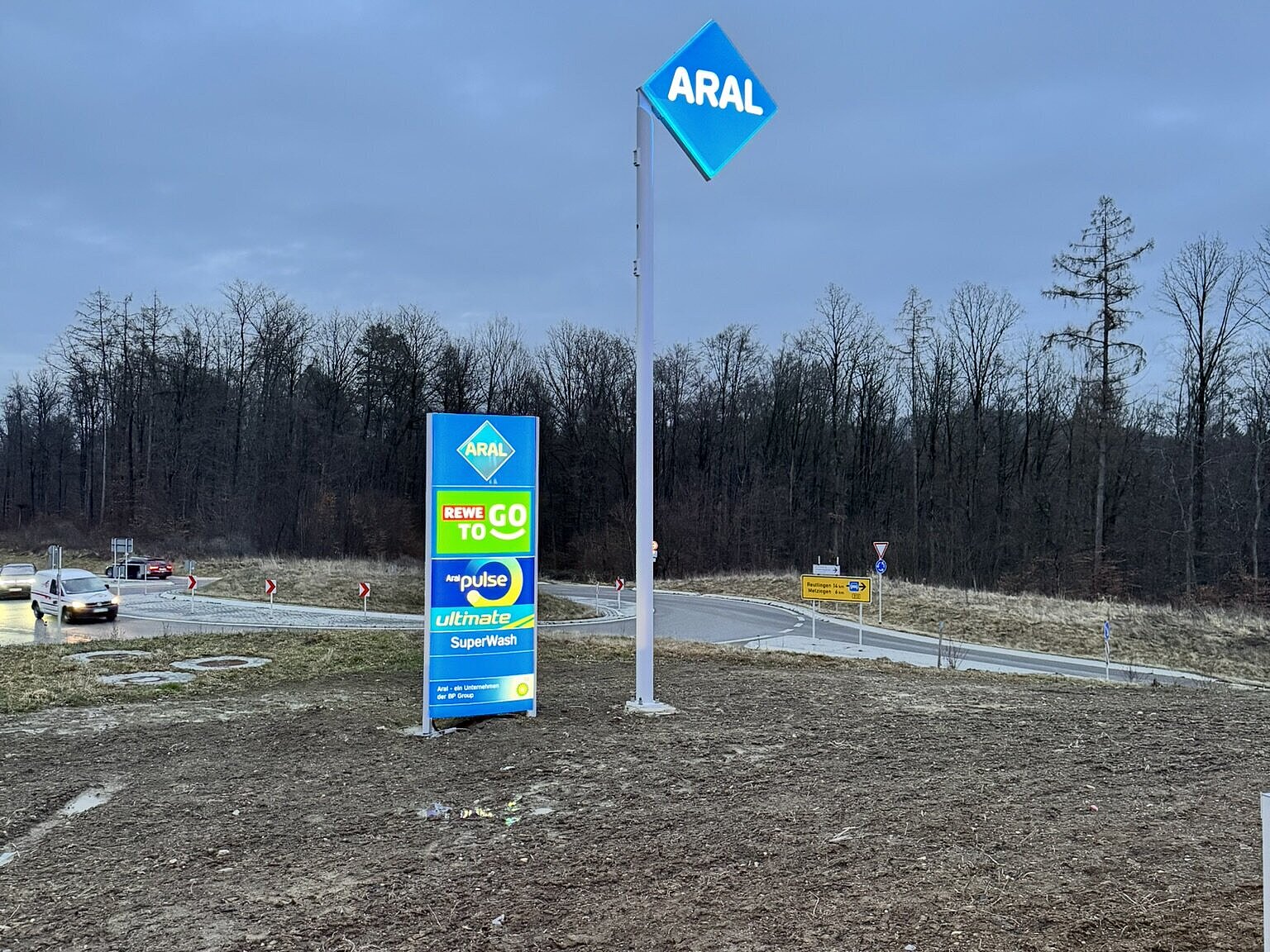
- Backlit information signs and illuminated advertising displays
Commissioning
After the service station was put into operation, Müller‑BBM Industry Solutions conducted on‑site measurements to determine how much light – and with which spectral composition – is actually emitted by the installed lighting systems in the surrounding area.
Result
The forecast of light immissions at the relevant forest edges showed that the lighting systems for the forecourt and pathway illumination, as well as the undimmed advertising installations, partially exceed the specified limit for vertical illuminance Ev ≤ 0.1 lx at the forest edges – sometimes significantly.
The following protective measures were agreed upon with the operator:
- Dimming of advertising installations during nighttime
- Presence‑controlled operation of the forecourt lighting
- Dimming of pathway lighting
- Nighttime shutdown of illuminated service pylons and their associated pole‑mounted luminaires
- Nighttime shutdown of all lighting systems associated with the car‑wash facility
With these mitigation measures in place, the average vertical illuminance at the relevant forest edges can be limited to an average of 0.1 lx.