Odour impact assessmentfor local snack bars
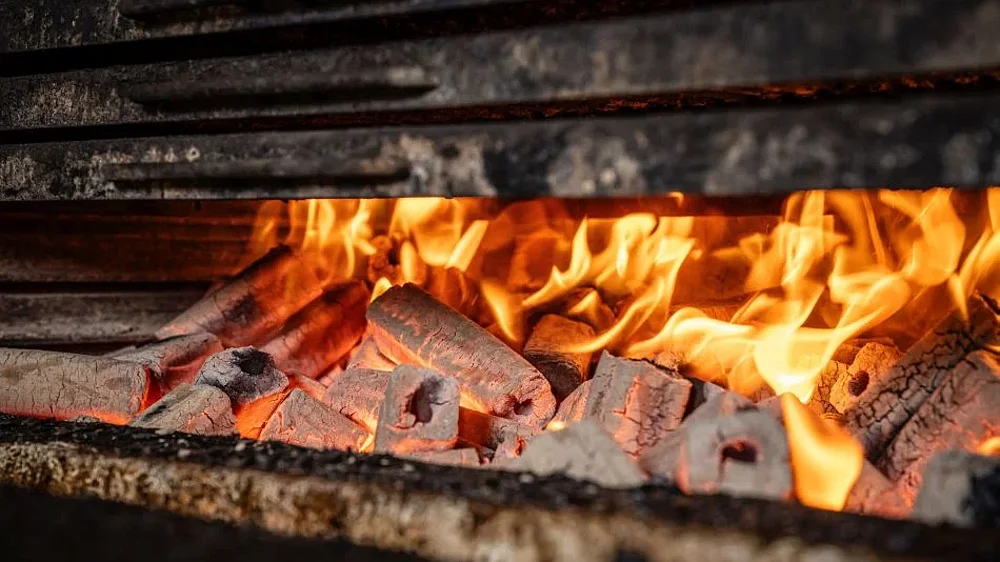
When several snack bars with charcoal grills are located in close proximity to one another, the odour situation can quickly become a challenge. In Gelsenkirchen, this raised the question of how to measure and assess the odour impact using scientifically sound methods. Our project demonstrates the methods and approaches that can be used to analyze even complex odour situations in a transparent and reliable manner.
At a glance
| Client: | City of Gelsenkirchen (Environment Department) |
| Branche: | Restaurants / Snack bars |
| Object: | Charcoal grills used by snack bars |
| Expertise: | Odour Emission Measurements / Odour Dispersion Calculation |
| Location & period: | Gelsenkirchen, North Rhine-Westphalia March 2025 |
Initial situation
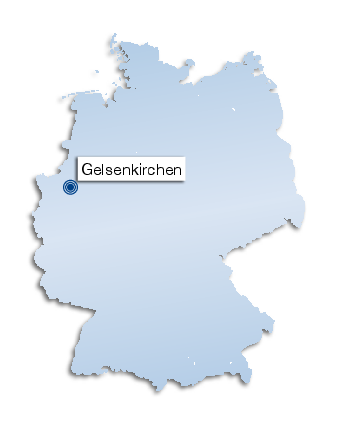
Due to odour emissions from several neighbouring charcoal grills, there have been persistent complaints in the Horst district of Gelsenkirchen. Three gastronomic establishments, some of which have overlapping opening hours, are contributing to cumulative emissions. It is believed that this results in the permissible immission limit specified in the Technical Instructions on Air Quality (TA Luft) being exceeded at relevant points-of-interest.
Mission
In order to assess odour emissions and odour immissions, the Environment Department of the City of Gelsenkirchen has commissioned the Gelsenkirchen branch of Müller-BBM Industry Solutions to carry out odour emission measurements and to draw up an odour level forecast.
Measurement
Odour emission measurements in accordance with DIN EN 13725:2022 in conjunction with VDI 3884 Part 1 were carried out under various operating conditions (lighting the barbecue, as well as at partial and full load) in the exhaust air from the charcoal barbecues and, additionally, in the kitchen exhaust air of the respective establishments. The study focused exclusively on odour perception and did not include other air pollutants. In addition to the emission data obtained, a 3D model of the surrounding buildings and meteorological data representative of the site in terms of both location and time were also included in the odour propagation calculation.
The odour propagation calculations were carried out in accordance with TA Luft, in particular Annexes 2 and 7 thereof, as well as VDI 3783 Part 13. Due to the dense building structure in the investigated area and the discharge conditions of the emission sources, the upstream wind field calculations were performed using the microscale wind field model MISKAM.
Result
During site inspection, the exhaust air flows from charcoal barbecues and kitchens were identified as significant sources of odour. The odour emissions from individual charcoal barbecue units differ from one another, in some cases significantly. Furthermore, the emission behaviour of individual charcoal barbecues is also subject to significant variations over time. The reasons for the differences in emission behaviour between individual barbecues may include the design and size of the barbecues, the type and quality of the food being cooked and the charcoal used, the handling of the barbecue and the food during the cooking process, and the method and frequency of cleaning.
Taking into account the emission parameters determined, the operating times of the facilities and the other input parameters for the propagation model, the propagation calculation was used to forecast an air quality situation which indicates that the air quality limits set out in Annex 7 of the TA Luft will be exceeded in parts of the investigated area.
The next step is to work together with all stakeholders to develop strategies for improving the air quality situation and reducing the potential for conflict
To reduce odour emissions, the following general measures were recommended:
- adjusting the operating times of charcoal barbecues without restricting the opening hours of the establishments
- regular and thorough cleaning of the barbecue and exhaust air systems
- adjusting the exhaust conditions, provided this can be achieved with reasonable measures